
Service
Cloud Landing Zones & Foundations
Design and build secure cloud foundations with networking, identity, governance and operational controls.


Build the Cloud Foundation before workloads arrive
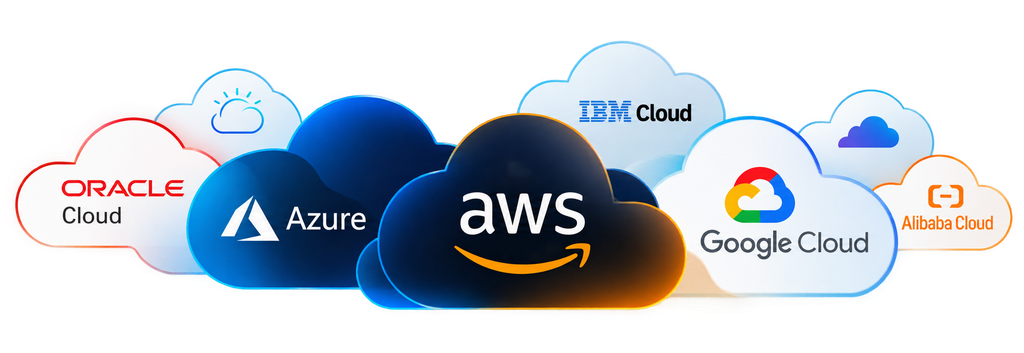
Cloud Landing Zones give your teams a secure and repeatable starting point for AWS, Microsoft Azure and Oracle Cloud Infrastructure. We bring identity, networking, security, governance, logging, cost controls and automation into one foundation.
Typical scenarios:
New cloud environments – establish standards before the first production workload.
Cloud migration – prepare the target before migration waves begin.
Existing cloud estates – bring fragmented environments under common governance.
Hybrid and multi-cloud growth – apply consistent controls without hiding provider-specific architecture.
How do cloud landing zones work?
A landing zone brings identity, networking, security, governance and automation into one reusable foundation for every workload and team.
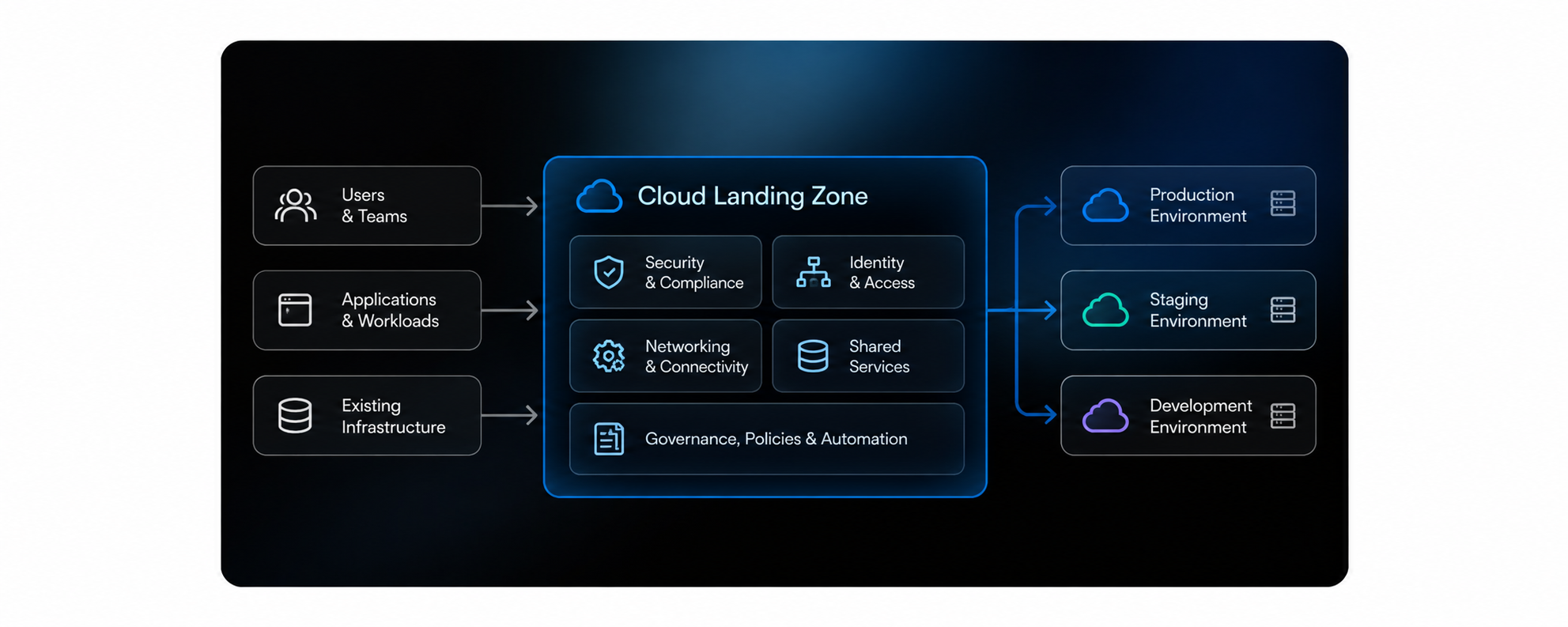
What is a cloud landing zone?
A cloud landing zone is a governed environment for running enterprise workloads. It defines how cloud accounts, access, networks, security, logging and operational controls work together, so teams can deploy services without rebuilding the same foundation for every project.
From design to a working platform
We design the landing zone around your organization, existing estate and target workloads. We use proven cloud reference architectures where they help, then adapt identity, networking, governance and operations to your real constraints.
The result is a foundation your teams can understand, extend and operate.
We provide:
Cloud foundation architecture
Infrastructure as Code implementation
Security and governance guardrails
Workload onboarding and handover

Benefits of Cloud Landing Zones & Foundations
Frequently Asked Questions
What is a cloud landing zone?
A cloud landing zone is the shared foundation used to run enterprise workloads in the cloud. It defines account or subscription structure, identity, networking, security, governance, logging and operational controls so new workloads can follow approved patterns instead of designing these basics again.
Do we need a landing zone if we already use cloud?
Yes, often. A landing zone does not require an empty environment. We can assess existing accounts, subscriptions, networks and workloads, keep what works, and introduce common governance and automation step by step without rebuilding the whole estate.
Is a landing zone the same as cloud migration?
No. A landing zone prepares the target environment; cloud migration moves applications, data and infrastructure into it. For larger migrations, we normally establish and validate the foundation before production migration waves begin.
Which cloud platforms do you support?
We design landing zones for AWS, Microsoft Azure and Oracle Cloud Infrastructure. We use provider-native architecture and services while applying common principles for ownership, identity, security, Infrastructure as Code, cost allocation and operational visibility.
Can you build a hybrid or multi-cloud landing zone?
Yes. We standardize the controls that should be common across environments while keeping provider-specific identity, networking and governance explicit. The same foundation can also include connectivity with data centers, private platforms and enterprise identity systems.
Do you use Infrastructure as Code?
Yes. Infrastructure as Code is a core part of the service because the foundation must be repeatable, reviewable and maintainable. Depending on the platform and your standards, we work with Terraform, OpenTofu, CloudFormation, Bicep and related automation tools.
Can a landing zone help with compliance?
Yes. It can implement many technical controls required by security and regulatory frameworks, including identity, logging, encryption, network restrictions and policy enforcement. A landing zone supports compliance evidence, but it does not replace legal interpretation, risk ownership or formal audit work.
Who owns the landing zone after implementation?
Your organization does. We provide the architecture, Infrastructure as Code, configuration, operating guidance and knowledge transfer required for your platform team, infrastructure team or Cloud Center of Excellence to operate and evolve the foundation. Nubes can also provide ongoing support when required.
Turn your Technology Challenge into a clear Delivery Plan
Nubes Consulting Digital helps design, modernize and operate complex technology environments. From Cloud and Architecture to DevOps, SRE and Engineering Delivery, we focus on practical decisions, reliable execution and measurable business outcomes.
