
Service
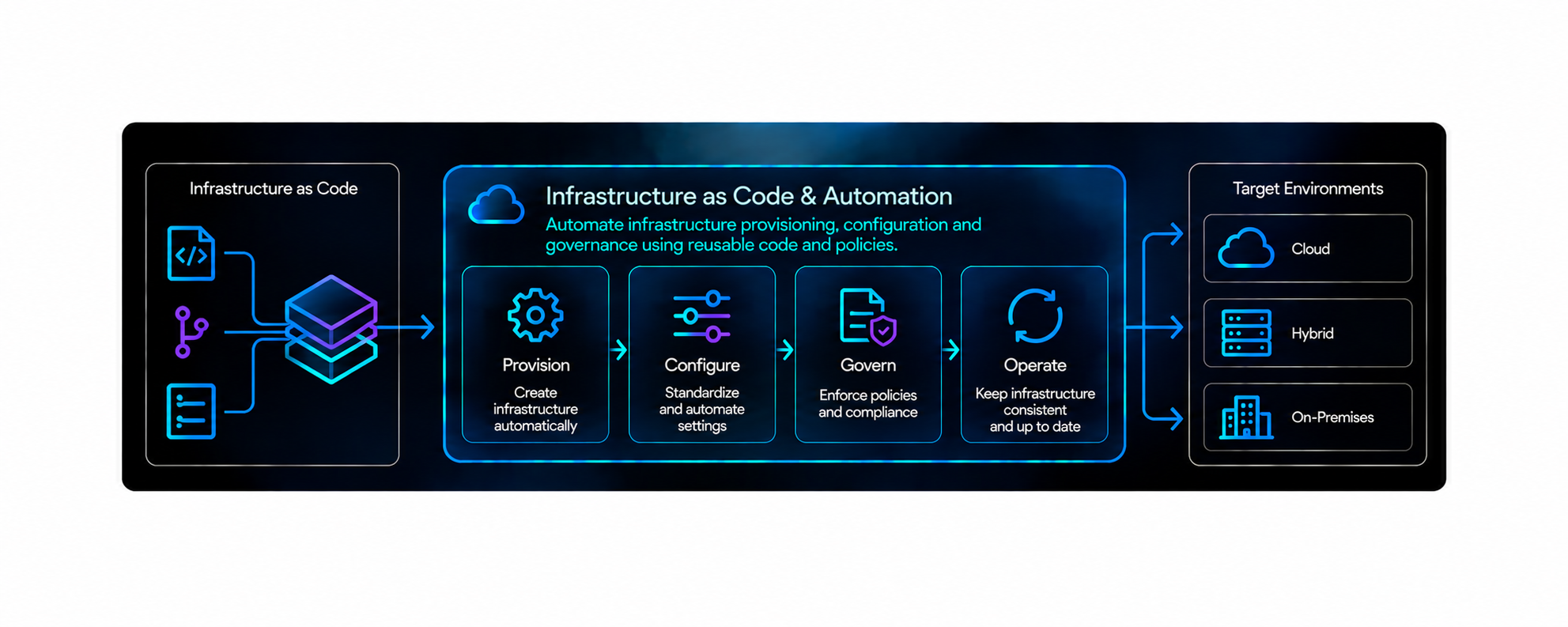
Infrastructure as Code & Automation
Automate infrastructure provisioning, configuration and governance using reusable code and policies.

Make infrastructure repeatable instead of manually rebuilt
Infrastructure becomes difficult to control when environments depend on console changes, scripts, tickets and knowledge held by individual engineers.
We turn cloud and infrastructure configuration into reusable code, automated delivery workflows and policy checks so environments can be created, changed and governed through a predictable engineering process.
Typical scenarios:
Infrastructure is still created manually – environments take too long and configuration differs between teams.
Terraform already exists but has become difficult to manage – duplicated code, unclear ownership and state problems slow delivery.
Cloud governance relies on documentation – security and architecture rules are checked manually or too late.
Existing infrastructure needs to come under code management – production resources already exist but lack a reliable source of truth.
How do Infrastructure as Code & Automation work?
We describe infrastructure in version-controlled code, package common patterns for reuse and automate planning, validation, approval and deployment through controlled pipelines.
What does Infrastructure as Code include?
Infrastructure as Code, or IaC, manages infrastructure through declarative configuration or software code instead of repeated manual actions. It creates a reviewable definition of how environments should look and a repeatable process for changing them.
From scripts and console changes to an infrastructure delivery system
Writing Terraform files is only the beginning.
We design how code is structured, who owns it, how state and secrets are handled, which modules teams can reuse, what policies must pass and how production changes are approved.
The result is an operating model for infrastructure change — not another repository nobody wants to maintain.
We provide:
Infrastructure as Code architecture and modules
CI/CD and infrastructure delivery automation
Policy as Code and governance controls
Drift management and existing-infrastructure adoption

Benefits of Infrastructure as Code & Automation
Still depending on manual infrastructure changes and one-off scripts?

Frequently Asked Questions
What is Infrastructure as Code?
Infrastructure as Code is the practice of defining and managing infrastructure through code or declarative configuration.
Instead of creating networks, virtual machines, databases and cloud services manually, engineers describe the required state and use automation to create or update it.
Because the definition is stored in version control, changes can be reviewed, tested and traced in the same way as software changes.
OpenTofu, for example, describes IaC as a consistent workflow for defining and managing both cloud and on-premises resources throughout their lifecycle.
Which Infrastructure as Code tools do you work with?
We are cloud and tooling agnostic.
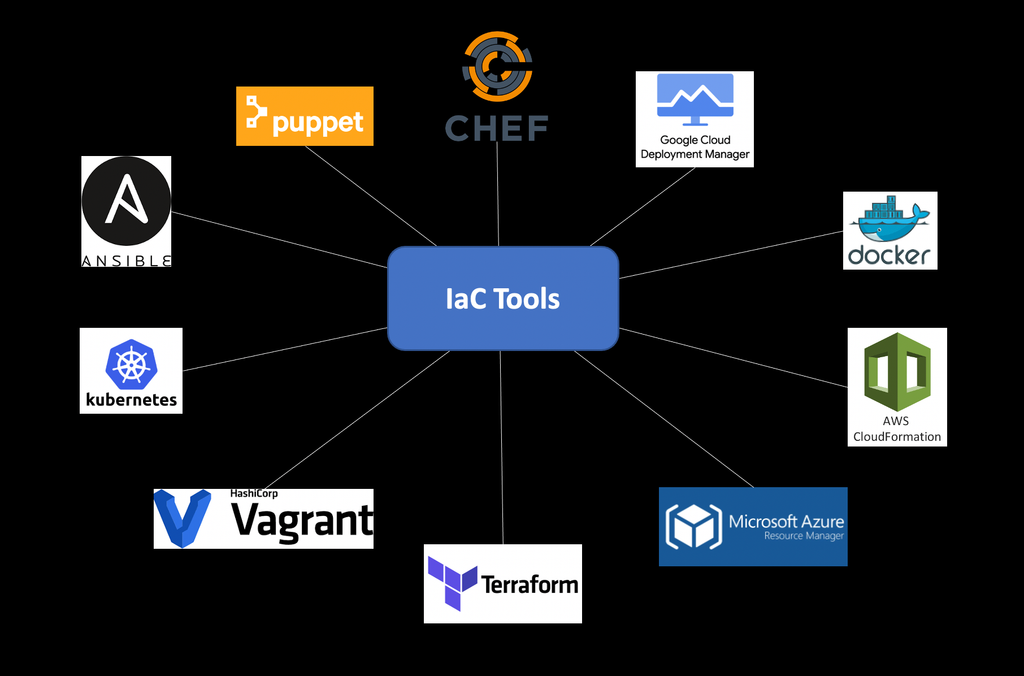
Depending on the environment, we can work with Terraform, OpenTofu, AWS CloudFormation and CDK, Azure Bicep, provider-native tooling and other suitable automation technologies.
We choose the tool based on your infrastructure estate, team skills, existing standards, governance requirements and long-term operating model rather than forcing every client onto one product.
Should we use Terraform or provider-native IaC?
There is no universal answer.
Terraform or OpenTofu can be useful when one workflow needs to cover several cloud providers, infrastructure platforms or SaaS services.
Provider-native tools such as CloudFormation/CDK or Bicep can be a strong choice when an estate is concentrated around one provider and deep integration with its services is valuable.
Microsoft itself supports both Bicep and Terraform for Azure landing zones rather than treating one model as universally correct.
What is Policy as Code?
Policy as Code expresses governance requirements as machine-readable rules that can be tested automatically during infrastructure delivery.
For example, a policy can check whether resources use approved regions, whether network rules expose unsuitable ports or whether production resources follow required configuration.
Policies can produce warnings or stop a deployment entirely depending on the rule.
Terraform currently supports policy enforcement through technologies such as OPA and Sentinel, while Google Cloud also supports validating Terraform plans against organization policies before deployment.
How do you prevent Infrastructure as Code from becoming dangerous automation?
Automation should not mean uncontrolled access to production.
We separate planning from deployment permissions, run validation and security checks in pipelines, review proposed changes and use approval gates where the risk requires them.
Production infrastructure changes should also have clear ownership and rollback or recovery procedures.
Microsoft specifically recommends separate identities for plan and deployment operations and human approval before production apply/deploy stages.
What is infrastructure drift?
Infrastructure drift happens when the real environment no longer matches the configuration stored in code.
For example, an engineer might change a firewall rule directly in a cloud console during an incident and never update the corresponding IaC definition.
This can create unexpected results during future deployments.
Tools such as Terraform and CloudFormation can detect these differences so teams can decide whether to bring the resource back to its intended state or update the code to reflect an approved change. HashiCorp Developer
Can you bring our existing infrastructure under Infrastructure as Code?
Yes.
Many organizations begin IaC after production environments already exist.
We can inventory suitable resources, define or generate corresponding configuration, import them carefully into the IaC management model and then refactor the configuration into maintainable modules.
We do not recommend importing everything automatically. Existing infrastructure often contains undocumented dependencies and historical choices that need to be understood before code becomes authoritative.
Terraform’s own guidance warns that imports reveal current resource state but do not automatically understand infrastructure intent, health or hidden relationships, so the generated result still requires engineering review.
How is this different from Platform Engineering?
Infrastructure as Code & Automation focuses on how infrastructure is defined, tested, governed and changed.
Platform Engineering uses those capabilities to create developer-facing self-service products and Golden Paths.
For example, this service might create a reusable Terraform module and governed deployment pipeline for a database.
A developer platform could then expose that capability as “Create database” through a self-service workflow without asking application teams to understand the Terraform implementation underneath.
They work closely together, but IaC is the automation foundation while Platform Engineering is the developer-facing product built on top of shared capabilities.
Turn your Technology Challenge into a clear Delivery Plan
Nubes Consulting Digital helps design, modernize and operate complex technology environments. From Cloud and Architecture to DevOps, SRE and Engineering Delivery, we focus on practical decisions, reliable execution and measurable business outcomes.