
Service
Hybrid & Multi-Cloud Solutions
Build consistent infrastructure and governance across cloud providers, private platforms and data centers.

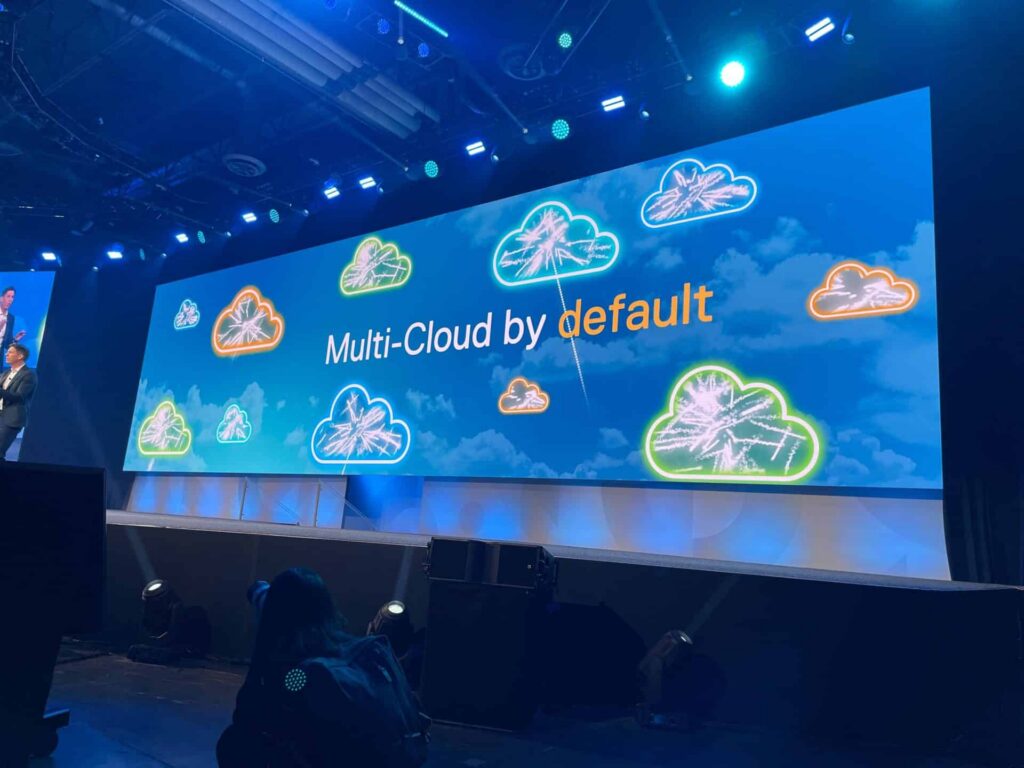
Run different environments as one technology estate
We design hybrid and multi-cloud environments that connect public cloud, private infrastructure and data centers without creating another layer of operational complexity.
We help you decide what should be common across environments, what should remain provider-specific, and how workloads, data and teams should work across the whole estate.
Typical scenarios:
Hybrid infrastructure – connect cloud workloads with private platforms and data centers.
Multiple cloud providers – introduce common governance without forcing every cloud into one model.
Mergers and acquisitions – bring inherited infrastructure under consistent operational control.
Regulated and critical workloads – place systems where data, resilience, latency and control requirements can be met.
How do Hybrid & Multi-Cloud Solutions work?
We connect environments through shared architecture principles, governance, automation and operational visibility while preserving the native capabilities of each platform.
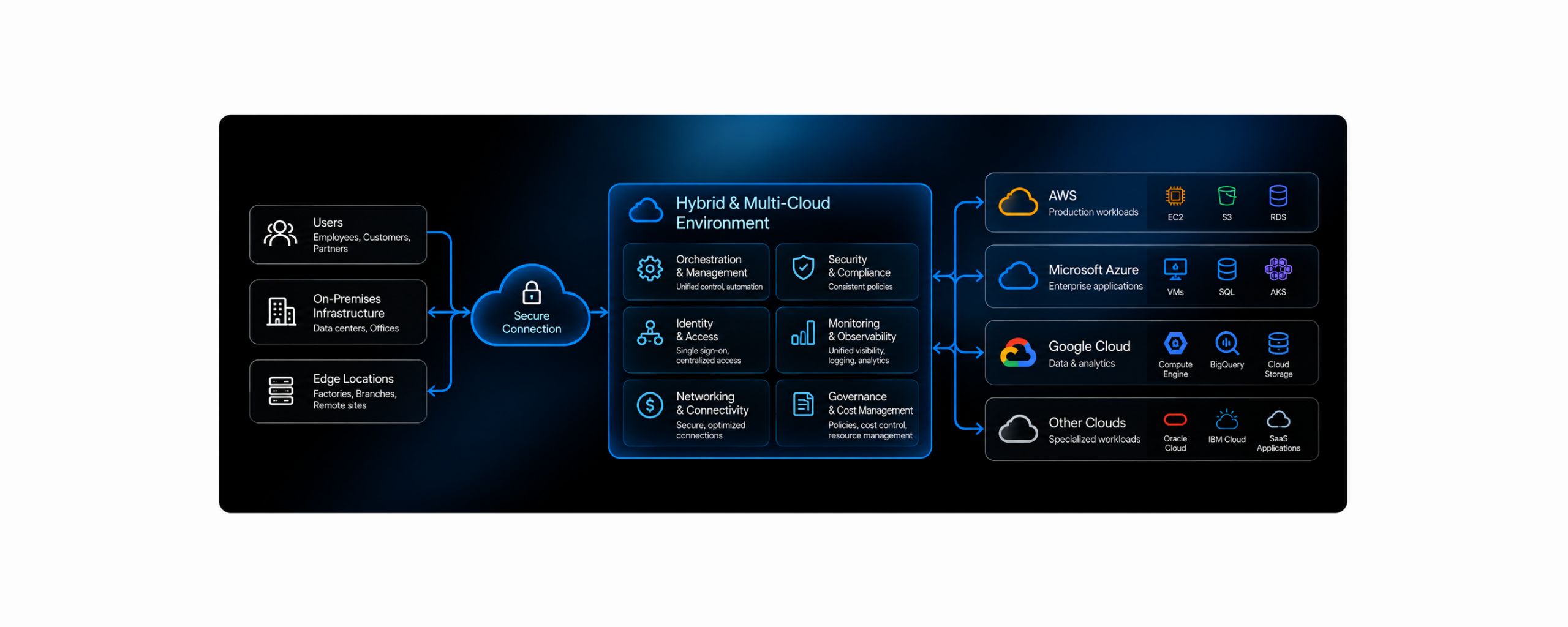
What is hybrid and multi-cloud infrastructure?
Hybrid cloud combines public cloud with private or on-premises infrastructure. Multi-cloud uses services from more than one cloud provider. In both cases, the challenge is not simply connectivity — it is operating different environments without creating isolated teams, controls and processes.
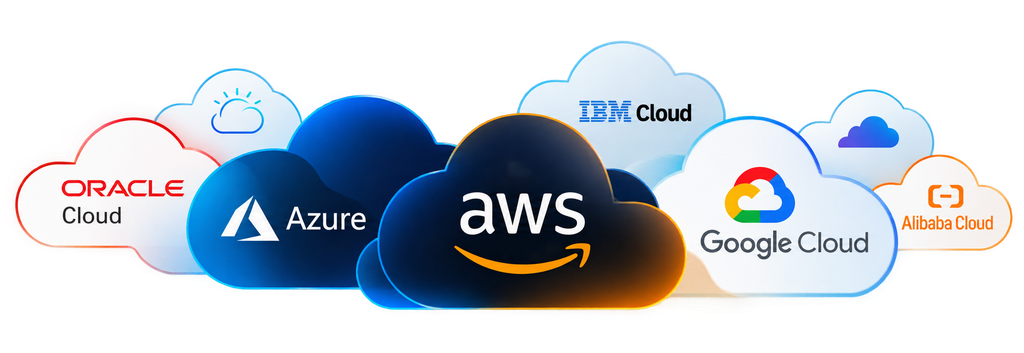
Consistency where it helps. Native cloud where it matters.
We do not try to make AWS, Azure, Google Cloud, OCI, private platforms and data centers look identical.
Instead, we define common standards for the areas where consistency reduces risk and effort, while keeping provider-native architecture where it gives you better functionality, security or economics.
We provide:
Hybrid and multi-cloud architecture
Cross-environment networking and identity
Governance and Infrastructure as Code standards
Monitoring, operations and workload placement

Benefits of Hybrid & Multi-Cloud Solutions
Frequently Asked Questions
What is the difference between hybrid cloud and multi-cloud?
Hybrid cloud combines public cloud with private infrastructure, data centers or edge environments.
Multi-cloud means using services from more than one cloud provider.
Many enterprise environments are both: they operate AWS, Azure, Google Cloud, OCI or other providers while still running important workloads on private or on-premises infrastructure.
Flexera’s latest research reflects exactly this pattern: hybrid remains the dominant model, while multi-cloud use continues to grow.
Do we need the same technology in every environment?
No.
Trying to make every platform identical can create more complexity than it removes.
We normally standardize architecture principles, identity expectations, tagging, governance, Infrastructure as Code, observability and operational processes where it makes sense. Provider-specific services remain provider-specific when they are the better solution.
How do you decide where a workload should run?
We consider the workload rather than starting with a preferred provider.
Typical factors include data location, latency, availability, recovery requirements, integrations, security, regulation, operating skills and total cost.
A workload may belong in public cloud, private infrastructure, a regional provider or an existing data center. Hybrid architecture should make that decision explicit.
IBM similarly describes hybrid workload placement around requirements such as latency, data residency, compliance, performance and cost.
Can you connect our existing data centers with public cloud?
We start with common security principles and then implement them through the controls available in each environment.
This can include identity federation, privileged-access models, network segmentation, encryption, logging, security posture management and policy enforcement.
The objective is consistent security outcomes rather than identical configuration syntax in every platform.
Microsoft follows a similar model with Azure Arc and Defender for Cloud, extending governance and security controls to supported resources outside Azure.
Does multi-cloud prevent vendor lock-in?
Not automatically.
Using several cloud providers can actually increase complexity if workloads depend heavily on different proprietary services.
We identify where portability matters, where provider-native services create more value, and what would be required to move or replace a workload later.
The goal is informed infrastructure choice, not avoiding every provider-specific capability.
Do you use Kubernetes for hybrid and multi-cloud environments?
Where it is appropriate.
Kubernetes can create a more consistent application platform across environments, especially for containerized workloads. But it does not solve networking, identity, data, governance or operational differences by itself.
We use Kubernetes when it improves the architecture rather than treating it as a mandatory abstraction layer.
Red Hat and Nutanix both use Kubernetes as an important part of their hybrid models, but also combine it with governance, automation, data and operational capabilities.
Can you improve an existing hybrid or multi-cloud environment?
Yes.
Many hybrid environments were never designed as one system. They grew through migrations, acquisitions, different application teams or changing business requirements.
We can assess the current estate, identify unnecessary differences and operational gaps, and introduce common networking, governance, automation and monitoring progressively without forcing a complete rebuild.
Turn your Technology Challenge into a clear Delivery Plan
Nubes Consulting Digital helps design, modernize and operate complex technology environments. From Cloud and Architecture to DevOps, SRE and Engineering Delivery, we focus on practical decisions, reliable execution and measurable business outcomes.
