
Service
Dedicated Engineering Teams
Build a stable team dedicated to your products, platforms or transformation program.


Build a team that stays with the work long enough to own the context
Complex products and platforms are difficult to develop with engineers who constantly rotate between projects. Every replacement loses context, slows decisions and creates another onboarding cycle.
We build stable engineering teams dedicated to your product, platform or transformation program, giving you consistent technical capability without having to recruit and assemble the complete team internally.
Typical scenarios:
An important product needs more long-term engineering capacity – but permanent recruitment cannot keep pace with the roadmap.
A platform or transformation program needs a stable team – short-term contractors create too much knowledge loss and coordination.
Several technical roles are needed together – cloud, DevOps, platform, SRE or application skills need to work as one team.
The internal team needs a reliable extension – external engineers should become part of the delivery rhythm rather than operate as separate suppliers.
How do Dedicated Engineering Teams work?
We build a stable team around your technology area and integrate it with your existing product, engineering and delivery processes so the same people can build knowledge, improve together and contribute over the longer term.
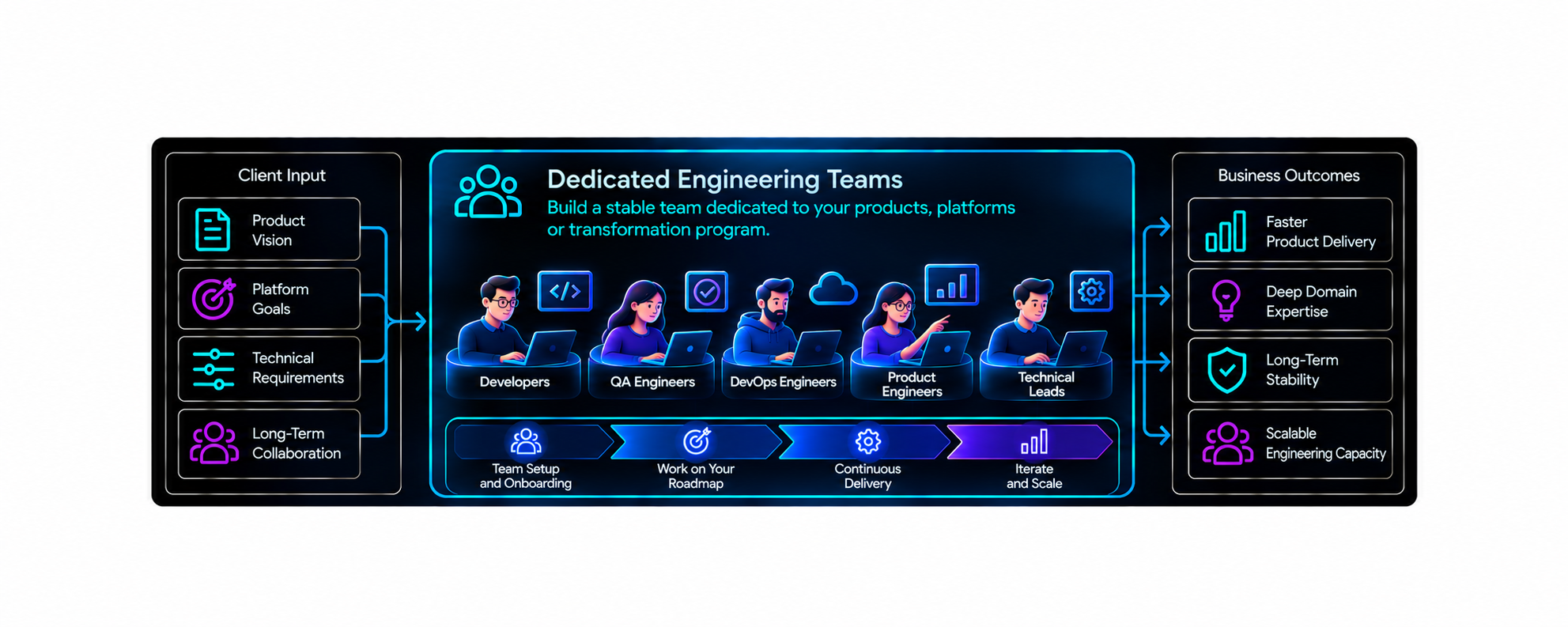
What does a Dedicated Engineering Team include?
The team is shaped around the product or platform rather than a generic staffing ratio. Roles, seniority and team size can evolve, but the goal is to keep a stable core that understands the systems and works closely with your organization.
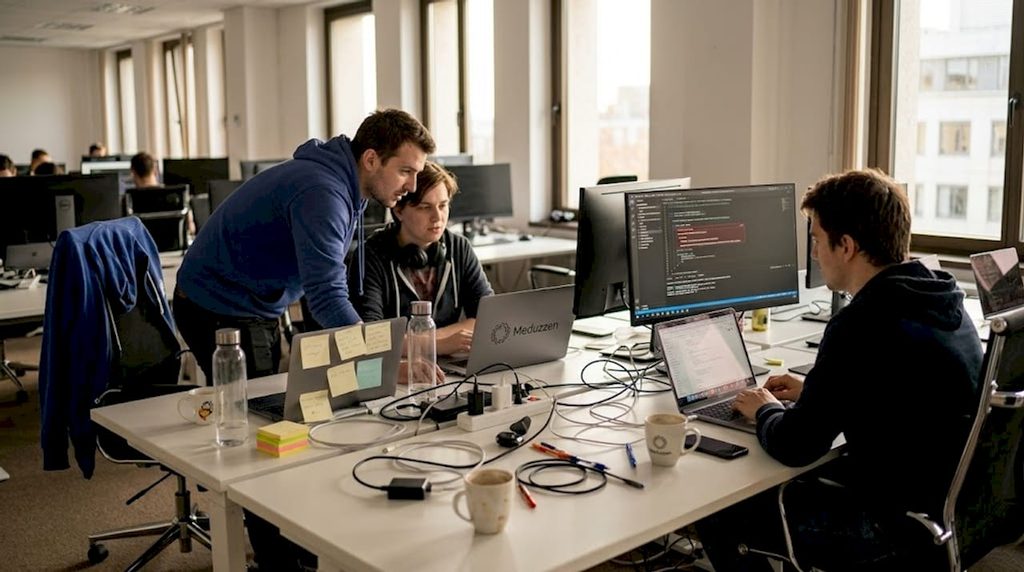
Keep the team stable while the roadmap evolves
Products and platforms rarely have a fixed endpoint. Priorities change, architecture develops and new business requirements appear.
A dedicated team provides continuity through that change.
Instead of rebuilding the delivery team every time the roadmap moves, the same engineers keep the system knowledge and can spend more time improving the product than relearning it.
We provide:
Dedicated engineering team design and staffing
Stable senior technical capability
Integration with your engineering operating model
Team evolution, knowledge retention and continuity

Benefits of Dedicated Engineering Teams
Frequently Asked Questions
What is a Dedicated Engineering Team?
A Dedicated Engineering Team is a stable external team assigned primarily or fully to your product, platform or transformation program.
Instead of requesting individual people when a vacancy appears, you establish a team that stays with the same technology area and builds knowledge over time.
The team normally works closely with your product and engineering leadership and can become a long-term extension of the internal organization.
How is this different from Staff Augmentation?
Staff Augmentation adds individual specialists to positions inside your existing team structure.
Dedicated Engineering Teams provide a stable group of engineers working together around the same product or technology area.
If you need one DevOps engineer for six months, Staff Augmentation may be enough.
If you need a continuing group of engineers who should learn the same systems, roadmap and ways of working, a Dedicated Engineering Team is usually a better model.
How is this different from a Managed Delivery Team?
The difference is mainly delivery leadership and accountability.
With a Dedicated Engineering Team, your organization normally retains stronger ownership of the backlog, priorities and delivery direction. Nubes provides the stable team and can support technical leadership, but the team operates as an extension of your organization.
With a Managed Delivery Team, Nubes takes more responsibility for technical planning, team coordination and delivery outcomes.
In simple terms:
Dedicated Team: the team is yours to direct.
Managed Delivery Team: you delegate the workstream and we manage its delivery.
What roles can be included in a Dedicated Engineering Team?
The composition depends on the work.
A team can include roles such as software engineers, cloud engineers, DevOps engineers, SREs, platform engineers, infrastructure specialists, QA engineers, architects or technical leads.
We prefer to build the team around the product and technical responsibilities rather than start with a fixed junior/middle/senior pyramid.
The mix can also change as the system moves from initial build toward scaling, modernization or production operations.
How long should a dedicated team stay together?
There is no fixed minimum, but this model creates more value when the work continues long enough for the team to build meaningful context.
McKinsey’s research notes that persistent teams staying together for three to six months or more, with members fully dedicated rather than context switching, become more consistent in estimates, velocity and throughput.
For important platforms and products, the relationship can continue considerably longer.
Can a dedicated team work with our existing engineers?
Yes.
This is often the best model.
The Nubes team can join your planning, repositories, communication channels, CI/CD processes, architecture practices and engineering ceremonies.
We aim to avoid a separate “client versus vendor” delivery model where work has to pass through long specification and handover chains.
DORA’s research supports team structures where engineers can deliver with fewer cross-team handoffs and dependencies because this makes continuous delivery easier.
Who owns the product roadmap and priorities?
Normally, the client does.
Your product or technology leadership defines the business direction, roadmap and priorities.
The dedicated team contributes engineering capacity, technical knowledge and implementation experience and can challenge priorities or architecture where useful.
This is one of the important differences from a fully managed delivery model.
What happens if our required skills change over time?
The team can evolve.
For example, an early modernization phase may need stronger architecture and infrastructure skills. Later, the same area may need more application engineering, SRE or platform capability.
We can adjust specialist roles while preserving a stable core wherever possible.
This is preferable to replacing the entire team whenever the technical phase changes, because continuity of system knowledge remains valuable throughout the lifecycle.
Turn your Technology Challenge into a clear Delivery Plan
Nubes Consulting Digital helps design, modernize and operate complex technology environments. From Cloud and Architecture to DevOps, SRE and Engineering Delivery, we focus on practical decisions, reliable execution and measurable business outcomes.
